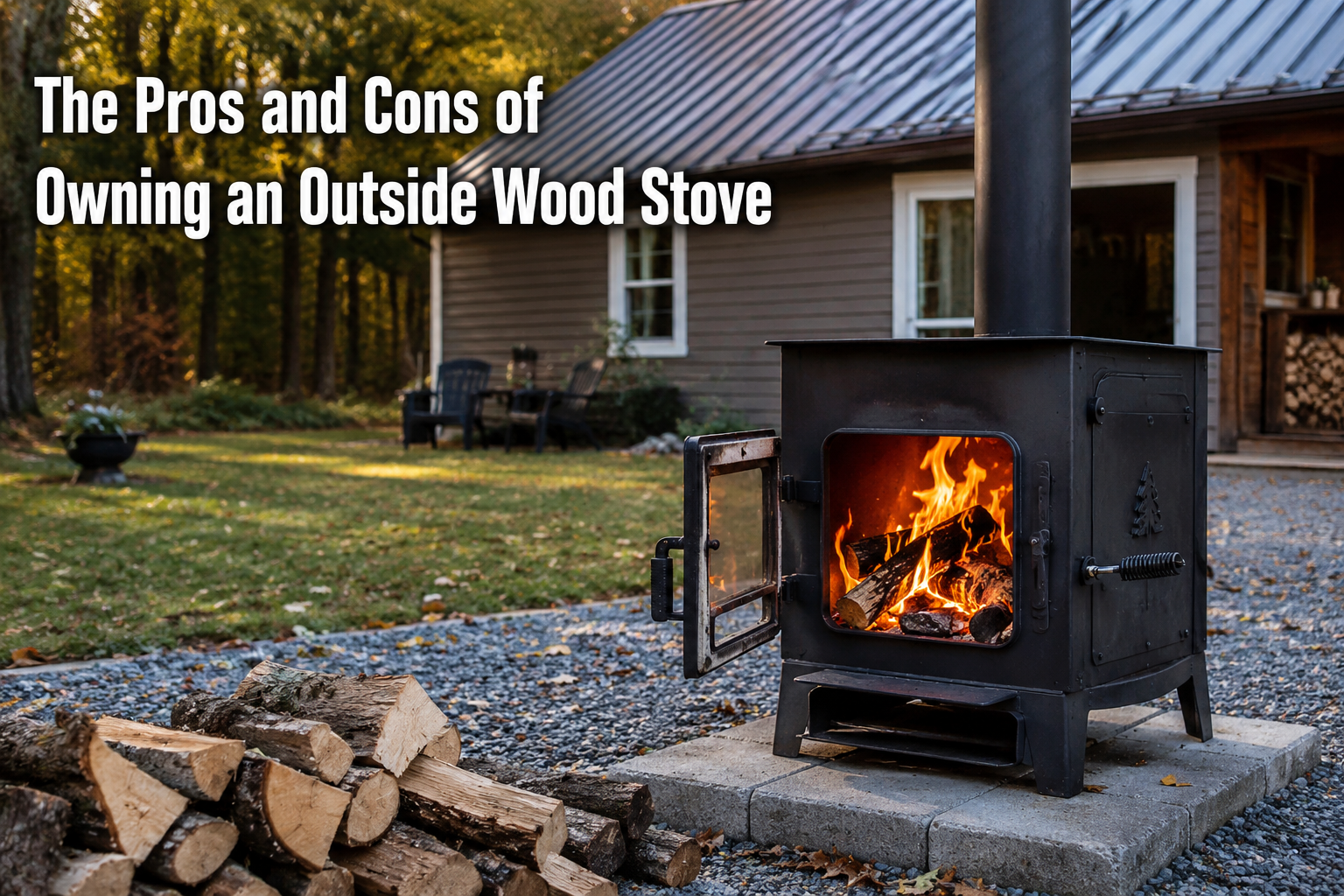
An outside wood stove can provide efficient whole-home heating while helping reduce reliance on traditional heating fuels. However, like any heating system, it comes with advantages and trade-offs that homeowners should understand before investing.
When winter temperatures arrive, many homeowners begin looking for heating options that are both reliable and cost-effective. An outside wood stove has become a popular choice for people living in rural areas, on larger properties, or anywhere access to firewood is readily available. Unlike traditional indoor wood stoves, these systems keep the fire and smoke outside the home while transferring heat indoors through insulated underground pipes.
While the idea sounds appealing, an outside wood stove is not the perfect solution for every household. Understanding both the benefits and the challenges can help you make a confident decision that fits your home, budget, and lifestyle.
What Is an Outside Wood Stove?
An outside wood stove, often called an outdoor wood boiler, is a heating system installed outside your home. It burns wood inside a firebox to heat water, which is then circulated through insulated pipes into your home. The heated water can warm living spaces through radiant floor heating, baseboard heaters, forced air systems, or even provide domestic hot water in some installations.
Because the fire remains outdoors, homeowners can enjoy wood heating without bringing smoke, ash, and wood debris into the house.
The Benefits of Owning an Outside Wood Stove
Keeps Smoke and Ash Outside
One of the biggest reasons homeowners choose an outside wood stove is cleanliness. Since combustion happens outdoors, smoke, soot, ash, and wood chips stay outside instead of accumulating inside your home.
This creates a cleaner indoor environment and reduces the amount of routine cleaning compared to an indoor wood stove.
Can Heat Large Spaces
Many outdoor wood heating systems are designed to heat more than just a single home. Depending on the model and installation, they can provide heat for:
- Houses
- Garages
- Workshops
- Barns
- Greenhouses
- Multiple buildings on one property
This makes them especially attractive for rural properties.
Potential Energy Savings
If you have access to affordable or locally sourced firewood, heating costs may be lower than relying entirely on electricity, propane, or heating oil. The amount you save depends on fuel prices in your area, insulation quality, and how efficiently the system operates.
Increased Indoor Safety
With the fire located outside, there is less risk of sparks, smoke buildup, or accidental contact with hot surfaces inside the home. It also reduces concerns about storing large amounts of firewood indoors.
Long Burn Times
Many modern outdoor wood boilers are built with larger fireboxes than indoor stoves. This often allows for longer burn times between reloads, especially during moderate weather conditions.
The Drawbacks of an Outside Wood Stove
Higher Initial Investment
An outside wood stove often costs more upfront than a traditional indoor wood stove. Besides the unit itself, installation may include underground insulated piping, pumps, plumbing connections, and site preparation.
These additional expenses should be considered when planning your budget.
Regular Maintenance Is Required
Like any wood-burning appliance, routine maintenance is necessary to keep the system operating efficiently. This may include:
- Removing ash
- Cleaning heat exchange surfaces
- Inspecting pumps and plumbing
- Monitoring water treatment levels
- Checking for corrosion or leaks
Consistent maintenance helps extend the life of the equipment.
Requires a Steady Supply of Firewood
Owning an outside wood stove means planning for fuel. Firewood should be properly seasoned and stored in a dry location to maximize efficiency and reduce smoke production.
For homeowners without easy access to firewood, purchasing wood throughout the winter can become expensive.
Outdoor Trips During Winter
Unlike indoor fireplaces, outdoor systems require you to step outside to load wood. During heavy snow, freezing temperatures, or rain, this task may feel less convenient.
Many homeowners find the trade-off worthwhile, but it is something to consider.
Local Regulations May Apply
Some communities have regulations regarding outdoor wood burning appliances. These rules may address emissions, installation requirements, or minimum setback distances from neighboring properties.
Before purchasing a system, check your local building codes and environmental regulations.
Who Benefits Most From an Outside Wood Stove?
An outside wood stove is often a great fit for homeowners who:
- Live in rural or semi-rural areas
- Have access to affordable firewood
- Need to heat multiple buildings
- Want to reduce dependence on fossil fuels
- Prefer keeping smoke and ash outside
Urban homeowners or those with limited outdoor space may find other heating options more practical.
Tips for Getting the Best Performance
To maximize efficiency and reduce emissions:
- Burn only properly seasoned hardwood.
- Keep the firebox clean.
- Follow the manufacturer’s maintenance schedule.
- Use insulated underground piping during installation.
- Avoid burning treated or painted wood.
- Monitor water chemistry if your system uses a water jacket.
Proper operation not only improves heating performance but can also extend the lifespan of your equipment.
Environmental Considerations
Modern outdoor wood boilers are significantly more efficient than older models. Many newer systems are designed to meet stricter emissions standards established by regulatory agencies.
According to the United States Environmental Protection Agency, choosing certified wood heating appliances and burning dry, seasoned wood can reduce particulate emissions while improving efficiency.
Using high-quality fuel and operating the system correctly benefits both your heating performance and local air quality.
Frequently Asked Questions
Is an outside wood stove expensive to operate?
Operating costs vary depending on your local fuel prices and whether you have access to your own firewood. Many homeowners find operating costs lower than conventional heating systems when wood is readily available.
How long does an outside wood stove last?
With proper maintenance, many quality outdoor wood boilers can last 20 years or more.
Can an outside wood stove heat domestic hot water?
Yes. Many systems can be configured to provide hot water in addition to heating your home.
Does an outside wood stove require electricity?
Most systems use electricity to operate pumps and controls, even though the primary heat source is wood.
Final Thoughts
An outside wood stove offers several advantages, including efficient whole-home heating, cleaner indoor air, and the ability to heat multiple buildings from a single system. At the same time, it requires regular maintenance, a dependable firewood supply, and a larger upfront investment than some other heating options.
Choosing the right heating solution depends on your property’s size, your heating goals, and your long-term energy plans. If you would like expert guidance on selecting the best outdoor wood heating system for your needs, contact our team. We are happy to answer your questions and help you explore heating solutions that fit your home and lifestyle.