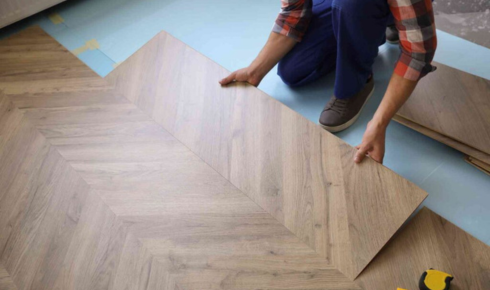
Choosing flooring for a Burbank property is not only about color, grain, or what happens to be trending this year. The material has to work with the structure of the home, the amount of daily foot traffic, the subfloor, sunlight exposure, and the way each room is actually used.
That matters because Burbank homes range from older properties with original wood subfloors to renovated interiors with open layouts, additions, and mixed flooring heights. A product that performs beautifully in one house may be a poor fit in another.
The best flooring choice comes from matching the material to the building rather than forcing the building to match the material. That approach usually leads to a cleaner installation, fewer future repairs, and a finished surface that feels appropriate for the space.
Hardwood Remains a Strong Long-Term Choice
Hardwood continues to be one of the most desirable options for Burbank homes because of its durability, natural appearance, and ability to be refinished over time.
Oak is especially practical because it offers a balanced grain pattern and handles everyday use well. White oak works nicely in modern interiors because its cooler undertones pair easily with light walls, darker cabinetry, and contemporary finishes. Red oak has a warmer appearance and may suit more traditional homes.
The condition of the subfloor matters before installation begins. Older homes may have areas that are slightly out of level or weakened from previous flooring work. Those issues should be corrected before new boards are installed.
Solid hardwood also needs proper acclimation and moisture testing. Skipping that part can lead to movement between boards later, which is not exactly the kind of character most homeowners are hoping to add.
Engineered Wood Works Well in Changing Conditions
Engineered hardwood is often a smart option when homeowners want the look of real wood with better dimensional stability.
Because it is built from multiple layers, engineered wood tends to react less dramatically to environmental changes than solid hardwood. That can be helpful in rooms where temperature or moisture levels fluctuate.
It is also versatile from an installation standpoint. Depending on the product and subfloor, engineered boards may be glued, nailed, stapled, or floated.
Wear-layer thickness deserves attention when comparing products. A thicker real-wood veneer may allow the floor to be refinished later, while thinner options may only tolerate light surface restoration.
For homeowners planning to stay in the property for many years, that difference can matter more than saving a small amount on the initial material cost.
Luxury Vinyl Is Practical for Busy Spaces
Luxury vinyl plank has become a popular choice for households and commercial interiors that need durability with relatively simple maintenance.
It performs well in areas where spills, pets, frequent foot traffic, or moisture are concerns. Kitchens, family rooms, rental units, offices, and retail spaces can all benefit from a quality vinyl product.
The important word is quality.
Cheaper products often repeat the same printed plank pattern too frequently, making the installation look artificial. Better products include greater pattern variation, stronger locking systems, thicker wear layers, and more realistic surface texture.
Subfloor preparation is still critical. Luxury vinyl is thinner than hardwood, so dips, ridges, or poorly patched areas underneath can sometimes become visible after installation.
A properly prepared base is what allows the finished surface to look smooth and stay locked together.
Tile Makes Sense in Moisture-Prone Areas
Tile remains one of the most reliable materials for bathrooms, laundry rooms, entryways, and other areas where moisture resistance is important.
Porcelain is particularly useful because it is dense, durable, and available in finishes that imitate stone, concrete, and even wood.
The installation process requires accurate floor preparation. Tile performs best over a stable, flat surface with the appropriate underlayment or membrane system. Movement in the subfloor can eventually lead to cracked grout or damaged tiles.
Large-format tiles are popular in modern interiors because they create fewer grout lines and a cleaner appearance. However, bigger tiles also require a flatter substrate. Small imperfections that might not affect smaller tiles can create lippage with larger formats.
That is why a good tile installation often begins with more floor preparation than homeowners initially expect.
Laminate Can Offer Good Value
Modern laminate flooring has improved significantly in both appearance and performance.
It can provide a realistic wood look at a lower price point than many hardwood options, making it useful for bedrooms, living areas, rental properties, and some light commercial spaces.
A strong wear layer helps resist scratches and surface damage, while quality photographic printing gives the planks more natural variation.
Moisture resistance varies by product, though. Some newer laminate systems offer better protection from spills, but that does not mean every product should be treated like waterproof flooring.
The expansion gap around the perimeter also needs to be installed correctly. Laminate is a floating floor, so it requires room to move. Pinning it too tightly against walls, cabinets, or fixed objects can cause buckling.
Material Choice Should Match the Room
There is rarely one flooring material that is best for every part of a property.
A Burbank homeowner may choose hardwood in the main living area, porcelain tile in a bathroom, and luxury vinyl in a converted workspace or rental section. What matters is making sure the transitions between those surfaces are planned carefully.
Finished floor height is one of the most overlooked details. Tile assemblies, hardwood, underlayment, and vinyl can all have different thicknesses. If those heights are not calculated before installation, awkward reducers or raised thresholds may be required later.
An experienced Flooring Contractor in Burbank can evaluate the subfloor, traffic level, room conditions, and transition points before recommending the most suitable material.
Homeowners can alsoview the local flooring service location on Google Maps when planning an on-site consultation.
Choose for Performance, Not Just Appearance
The best flooring material is the one that fits both the property and the way it will be used.
Hardwood offers long-term value and refinishing potential. Engineered wood provides additional stability. Luxury vinyl is practical for demanding spaces, tile performs well around moisture, and laminate can deliver strong value when installed in the right environment.
The final result depends just as much on preparation as material selection. Moisture testing, subfloor correction, layout planning, expansion space, and proper transitions all influence how the floor performs after installation.
Before ordering materials, have the property evaluated by a flooring professional who understands installation conditions as well as design. A well-planned floor should look polished on installation day and continue performing properly years later.